
Rats and mice are among the most destructive and health-threatening pests in Kerala. The state's dense vegetation, abundant water sources, paddy fields, fish markets, and traditional building styles create ideal conditions for rodent populations to thrive year-round. A single pair of rats can multiply into a colony of hundreds within months, causing severe damage to food stocks, electrical wiring, furniture, plumbing, and structural elements of your property.
Beyond physical damage, rodents in Kerala are carriers of dangerous diseases including leptospirosis — a serious health risk particularly during and after the monsoon season when floodwaters displace rodent populations into homes and workplaces. Our professional rodent control service uses a combination of trapping, baiting, and proofing techniques to eliminate active infestations and prevent re-entry, keeping your home, restaurant, warehouse, or office rodent-free throughout the year.
Understanding rodent infestations in Kerala
Kerala is home to several rodent species that commonly invade residential and commercial premises. Roof rats (black rats) are the most prevalent in homes and apartments, nesting in false ceilings, roof spaces, and wall voids. House mice infiltrate kitchens, food storage areas, and cabinets. Bandicoot rats are a major problem in ground-floor properties, gardens, paddy storage, and drainage systems — particularly in rural and semi-urban areas of central and northern Kerala. Identifying the species is essential to choosing the right treatment approach.

Gnaw marks & damaged wiring
Chewed electrical cables, packaging, wooden frames, and pipe insulation are clear signs of active rodent presence — and a serious fire and structural hazard.

Droppings, grease trails & burrows
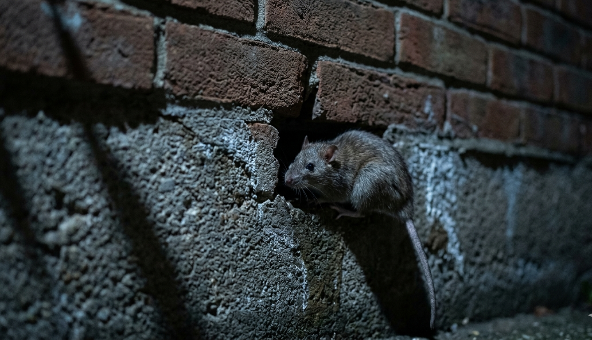
Dark, pellet-shaped droppings along walls, greasy rub marks on skirting boards, and burrow holes near foundations or garden beds indicate a well-established rodent infestation requiring immediate treatment.
Our rodent control process
We follow an integrated rodent management approach that goes beyond simple trapping. Our process combines inspection, multiple elimination methods, and proofing to deliver long-lasting, rodent-free results — whether you are dealing with a minor mouse problem in your kitchen or a severe rat infestation across a warehouse or restaurant complex.
Inspection & Species Identification
Our technician inspects the entire property to identify the rodent species, locate nesting sites, map entry and exit points, assess the severity of infestation, and identify food and water sources attracting rodents. This forms the basis of a targeted, effective treatment plan.
Trapping & Mechanical Control
We deploy snap traps and glue boards at strategic locations along rodent runways, near nesting zones, and at entry points. These are monitored and cleared regularly. Mechanical trapping is safe, residue-free, and ideal for kitchens, food areas, hospitals, and sensitive environments.
Rodenticide Bait Stations
For moderate to severe infestations, we place tamper-resistant bait stations containing second-generation anticoagulant rodenticide at locations inaccessible to children, pets, and non-target animals. Bait stations are checked and replenished on follow-up visits until rodent activity ceases completely.
Rodent Proofing & Exclusion
Eliminating existing rodents is only half the job. We identify and seal entry points — gaps around pipes, drainage openings, broken vents, door and window gaps, and wall cracks — using wire mesh, sealants, and physical barriers. This prevents new rodents from entering and is critical for long-term control, especially in Kerala's older buildings and ground-floor properties.
Why choose our rodent control in Kerala
Rodent control in Kerala demands a specialised approach. Unlike drier parts of India where rodent activity slows in summer, Kerala's climate keeps rats and mice active throughout the year — with population surges during and immediately after the monsoon when flooding drives them out of their natural habitats into homes, shops, and food storage areas. Our technicians are experienced in managing rodent pressure across Kerala's diverse settings — from high-rise apartments in Kochi and Thrissur to traditional homes in Wayanad and Idukki, rice storage facilities in Palakkad, fish processing units in Kozhikode and Alappuzha, and restaurants across all major districts.
- Covers roof rats, house mice & bandicoot rats
- Integrated approach — traps, baits & proofing
- Tamper-resistant bait stations for safety
- Rodent proofing to prevent re-entry
- Safe for food businesses — FSSAI-compliant methods
- AMC packages for year-round protection
- Service across all 14 districts of Kerala
Frequently asked questions
We treat all common rodent species found in Kerala, including roof rats (black rats), house mice, and bandicoot rats. Each species behaves differently — roof rats nest high up in false ceilings and roof spaces, house mice stay close to food sources in kitchens and cabinets, and bandicoot rats burrow underground near foundations and drainage areas. Our inspection identifies the species present so the right control method is applied.
We use tamper-resistant bait stations that are designed so only rodents can access the bait inside. These are placed in concealed locations such as behind appliances, inside wall gaps, along skirting boards, and in service areas — out of reach of children and pets. For homes where chemical baiting is not suitable, we can rely entirely on mechanical trapping methods, which are completely safe and residue-free.
Leptospirosis is a bacterial disease spread through the urine of infected rats, which contaminates floodwater, soil, and surfaces. Kerala reports some of the highest leptospirosis cases in India, particularly during and after the monsoon season when heavy rains flood areas where rodents nest and move around. Direct contact with contaminated water or surfaces can cause serious illness. Controlling rodent populations in and around your property is one of the most effective ways to reduce leptospirosis risk.
Most residential rodent infestations are brought under control within 2 to 3 visits — an initial treatment and one or two follow-up visits to monitor traps and bait stations, remove dead rodents, and replenish bait where necessary. Severe infestations in large properties, warehouses, or food businesses may require more visits over a 4–6 week period. We recommend an AMC for ongoing prevention, especially for commercial premises.
Yes. We provide FSSAI-compliant rodent control for restaurants, hotel kitchens, food processing units, supermarkets, and catering establishments across Kerala. Our methods for food businesses focus on mechanical trapping and tamper-resistant bait stations placed away from food preparation and storage areas, with detailed service records provided for audit and compliance purposes. We also offer monthly AMC packages specifically designed for food businesses.