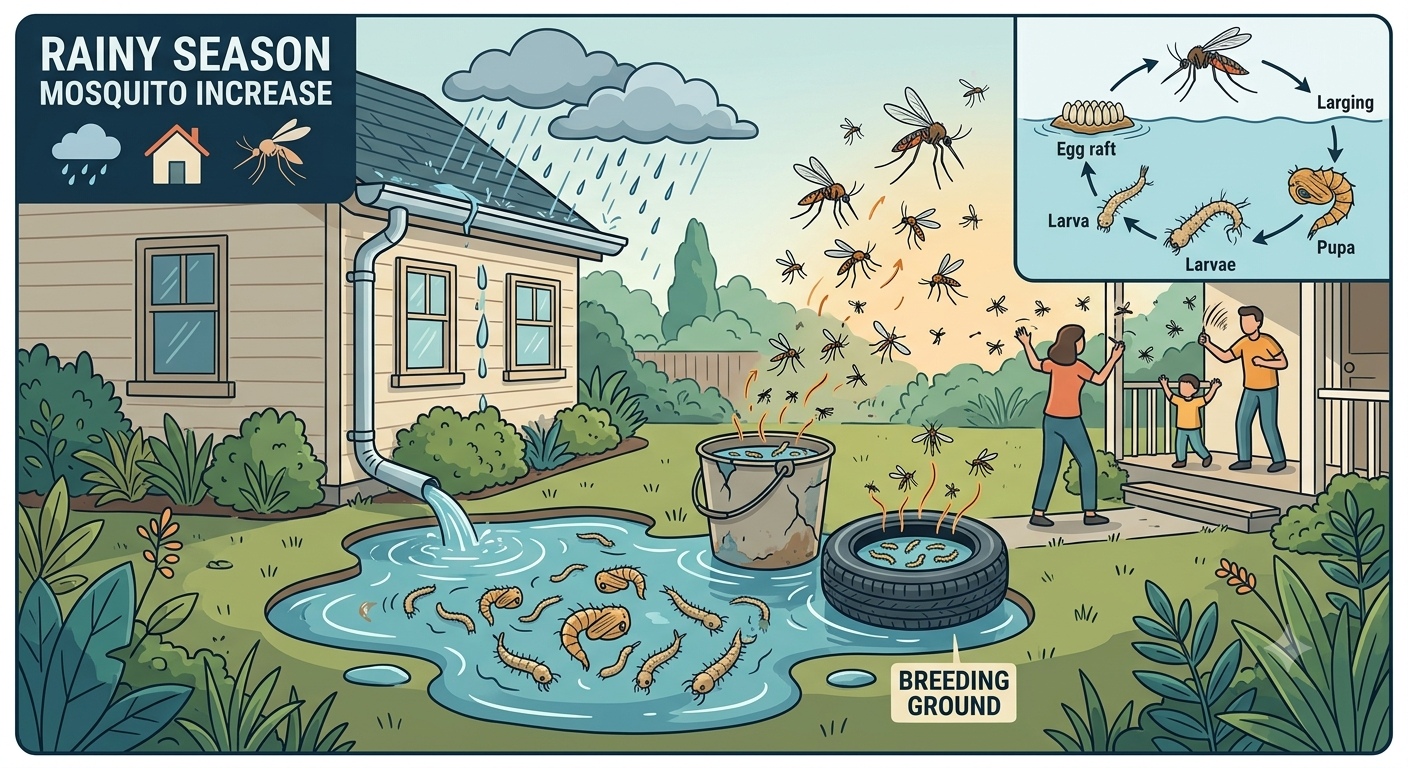
Why Mosquitoes Increase Around Homes During the Rainy Season
The first monsoon showers bring relief from the heat, green gardens, and cooler evenings. They also bring something less welcome: clouds of mosquitoes at dusk, buzzing around your ears at night and biting you on the veranda in the afternoon.
If it feels like mosquitoes appear out of nowhere every rainy season, you're not imagining it. In Kerala, the monsoon creates almost perfect conditions for them. Understanding why can help you cut their numbers before they become a health problem.
1. Rain Creates Breeding Spots Everywhere
Mosquitoes need water to complete their life cycle. Eggs hatch into larvae (often called wrigglers) and then pupae in standing water before emerging as flying adults. Under warm conditions, this can take around a week to ten days.
Heavy rain fills countless places that stay dry the rest of the year:
- Flower pot trays and discarded containers
- Coconut shells and broken earthen pots
- Old tyres stored in the yard
- Clogged roof gutters and sunshades
- Rubber tapping cups and areca nut spathes
- Open water tanks and unused buckets
- Puddles in construction sites or uneven ground
Even a bottle cap holding a spoonful of water can be enough for some species to lay eggs.
2. Warmth and Humidity Speed Everything Up
Kerala's rainy-season weather is mild, damp, and warm, which suits mosquitoes well. In these conditions, they develop faster, live longer, and are more active. A small population before the rains can grow into a large one in just a few weeks.
High humidity also helps adult mosquitoes survive. They rest in cool, shaded, damp places during the day, then come out to feed when the light drops.
3. Some Eggs Wait for the Rain
This is a lesser-known reason for sudden outbreaks. Certain mosquitoes, including the Aedes species, lay eggs just above the waterline in containers. These eggs can survive dry spells and hatch once rainwater covers them again.
So when the first heavy showers arrive, many eggs hatch together, and you see a sharp rise in numbers within days.
4. Greenery and Shade Give Them Places to Hide
Rain also encourages thick vegetation. Overgrown shrubs, tall grass, dense banana clumps, and cluttered corners provide cool, shaded resting spots for adult mosquitoes.
Dark and damp areas inside the house help too: behind curtains, under beds, inside wardrobes, and beneath sinks.
5. Drains, Paddy Fields and Backwaters Add to the Problem
Different mosquitoes prefer different habitats, and Kerala has plenty of all of them:
- Aedes mosquitoes breed in clean water collected in small containers and usually bite during the day.
- Culex mosquitoes prefer stagnant, dirty water such as blocked drains, septic overflow, and drainage channels, and are most active at night.
- Anopheles mosquitoes are more often found in slow-moving or still water such as ponds, marshy land, and paddy fields.
Homes near canals, backwater areas, farmland, or plantations often see heavier mosquito activity once the rains settle in.
Why This Matters for Your Family
Mosquito bites aren't only itchy. In many parts of Kerala, the rainy season coincides with a rise in mosquito-borne illnesses such as dengue, chikungunya, and filariasis. Children, the elderly, and people with weak immunity are especially vulnerable.
Even setting disease aside, constant bites disturb sleep, spoil outdoor time, and cause skin irritation or infection from scratching. Prevention is far easier than dealing with a full-blown infestation.
Simple Steps to Reduce Mosquitoes Around Your Home
You can't stop the rain, but you can take away most of what mosquitoes need.
Check for standing water weekly. Empty or turn over buckets, pots, tyres, and containers. Scrub the insides of water storage vessels, as eggs can stick to the walls.
Keep gutters and drains flowing. Clear leaves and debris from rooftop drains, sunshades, and surface drains so water doesn't collect.
Cover water tanks and storage drums. Use tight-fitting lids or fine mesh.
Change water in plant trays and vases. Do it at least once a week, or avoid trays altogether.
Trim vegetation. Cut back dense bushes and tall grass near the walls, and tidy up coconut husks and fallen leaves.
Protect doors and windows. Fit mesh screens and repair any tears. Use bed nets for children and infants.
Fix leaks and damp spots. Dripping taps and seepage under sinks can keep small pools of water going.
Use light clothing that covers the skin in the evening, especially around dusk and dawn.
When Home Measures Aren't Enough
If you've cleared the obvious breeding spots and still find mosquitoes in large numbers, the source may be hidden: a neighbouring plot, a blocked underground drain, a water-logged area, or a spot that's hard to reach. Sprays and coils from the shop often provide only brief relief because they don't address the breeding sites or the resting areas where adult mosquitoes gather.
That's where mosquito control carried out by trained professionals makes a real difference. A proper service involves inspecting the property, identifying breeding and resting zones, treating them with suitable methods, and advising on how to prevent a return. For larger properties such as housing complexes, resorts, hostels, and commercial spaces, a planned mosquito treatment schedule through the monsoon months is often the most practical approach.
Mosquito Help Across Kerala
All Clear Pest Control Kerala serves homes, apartments, offices, and commercial properties in Kanjirapally, Pala, Kottayam, Pathanamthitta, Thiruvalla, Manimala, Alappuzha, Kayamkulam, Karunagappally, Kakkanad, Paravur, and Aluva.
If mosquitoes are making your evenings miserable this rainy season, don't wait for the problem to grow.
👉 Visit www.allclearpestcontrolkerala.com or contact us to book an inspection and get a plan suited to your property.