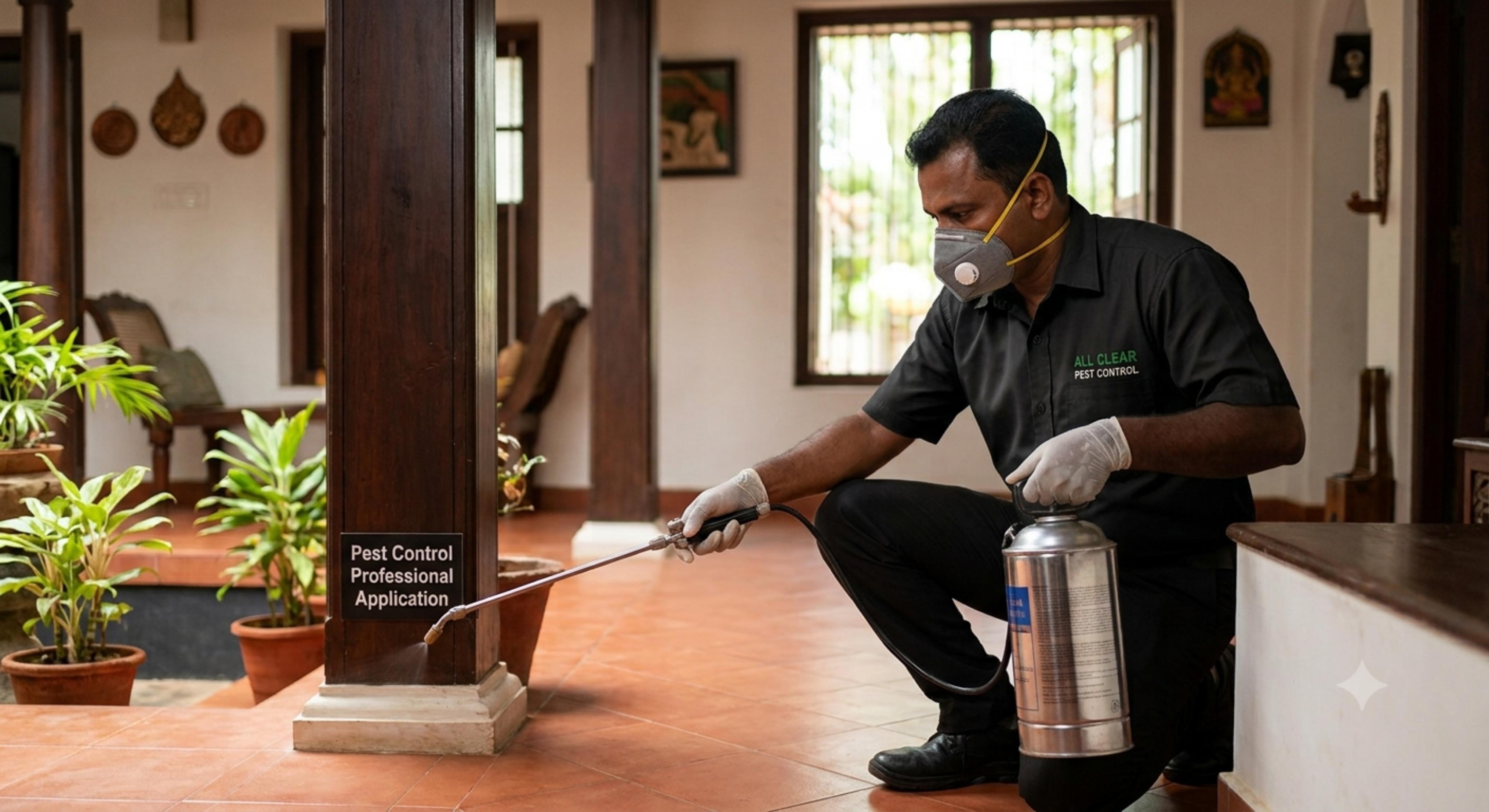
Why DIY Pest Control Often Fails: Professional Pest Control vs DIY
Pests rarely become a serious problem overnight. A few ants around the kitchen, termites near a wooden door, cockroaches appearing after dark, or occasional rodent activity may seem like minor issues. The common reaction is to buy a spray, apply it around the house, and hope the problem disappears. Sometimes it works for a short period. More often, it only pushes the problem out of sight.
DIY pest control can be useful for small, isolated issues, but it has clear limitations when pests have established nests, breeding areas, colonies, or hidden entry points. Using the wrong treatment can also waste time and allow the infestation to spread.
All Clear Pest Control approaches pest management differently by identifying the source of the problem before recommending treatment. This distinction is particularly important with termites, where visible damage may represent only a small part of a much larger colony.
Why DIY Pest Control Often Fails
DIY pest control usually focuses on the pests that are visible. Professional treatment focuses on understanding why those pests are present.
A spray may kill cockroaches that appear in the kitchen, but it may not address cracks, drains, food sources, moisture, or hidden nesting areas. Similarly, killing a few termites does not mean the colony has been eliminated.
Common reasons DIY pest control fails include:
-
Treating visible pests instead of the source
-
Using unsuitable chemicals or incorrect quantities
-
Missing hidden nesting and breeding areas
-
Failing to identify the pest correctly
-
Ignoring entry points and environmental conditions
-
Repeating temporary treatments without solving the cause
Another problem is timing. Pest activity can increase gradually, meaning a small infestation may become considerably harder to manage if treatment is delayed.
Professional Pest Control vs DIY: What Makes the Difference?
The biggest difference between DIY and professional pest management is the process.
Professional technicians generally begin by inspecting affected areas and identifying signs of infestation. They consider the pest species, level of activity, possible entry points, moisture conditions, and areas where pests may be hiding.
For households looking for home pest control services Kottayam, this type of inspection can help determine whether the issue is limited to one room or has spread to other areas.
Professional treatment can offer several advantages:
Accurate Pest Identification
Different pests require different treatment methods. Ants, termites, cockroaches, rodents, and bed bugs do not respond to the same approach. Correct identification prevents unnecessary or ineffective treatment.
Targeted Treatment
Rather than applying chemicals randomly, professional pest control can focus treatment on affected areas and likely pest pathways. This can reduce unnecessary chemical exposure and improve treatment efficiency.
Long-Term Prevention
A good pest management plan does not stop at killing existing pests. It also considers conditions that allow them to return, such as gaps, standing water, poor sanitation, moisture, and accessible food sources.
For businesses, professional pest management is especially important because recurring pest activity can affect employees, customers, stored materials, equipment, and daily operations.
Why Termite Problems Need Professional Attention
Termites are one of the clearest examples of why DIY pest control can fall short. They often remain hidden inside soil, walls, flooring, wooden structures, or other concealed areas.
Spraying a visible termite trail may remove the insects you can see, but it does not necessarily affect the colony. By the time damage becomes obvious, termites may already have been active for a considerable period.
Professional termite treatment involves assessing the affected structure and determining where termite activity is concentrated. For property owners searching for professional termite control Kottayam, proper inspection is an important part of choosing an effective solution.
Similarly, Residential Termite Control Kottayam should focus not only on current termite activity but also on vulnerable areas of the property. Wooden frames, flooring, foundations, damp areas, and concealed structural spaces may require attention depending on the infestation.
When Should You Choose Professional Pest Control?
DIY methods may be reasonable for an occasional ant or a small number of insects. Professional assistance becomes more appropriate when the problem is persistent, widespread, recurring, or difficult to identify.
Consider professional treatment when:
-
Pest activity continues after DIY treatment
-
Termite damage or mud tubes are visible
-
Rodent signs are found inside buildings
-
Pests are appearing in several areas
-
The infestation affects a workplace or commercial property
-
You are unsure which pest is causing the problem
For households requiring home pest control services Aluva, professional assessment can be particularly useful when pest activity keeps returning despite repeated household treatments.
Conclusion
DIY pest control has its place, especially for minor and occasional pest activity. However, it becomes less effective when the problem involves hidden colonies, repeated infestations, structural damage, or multiple pest entry points. The main weakness of DIY treatment is often not the product itself, but the lack of inspection and a clear treatment strategy.
Professional pest control takes a more structured approach by identifying the pest, assessing the extent of activity, treating relevant areas, and considering measures that can reduce future infestation. This is particularly important for termites because visible insects may represent only a fraction of the actual problem.
For property owners considering pest control services Kottayam, choosing a professional service can help address the issue more systematically instead of repeatedly treating the same symptoms. The same principle applies to termite management and residential pest problems in different locations