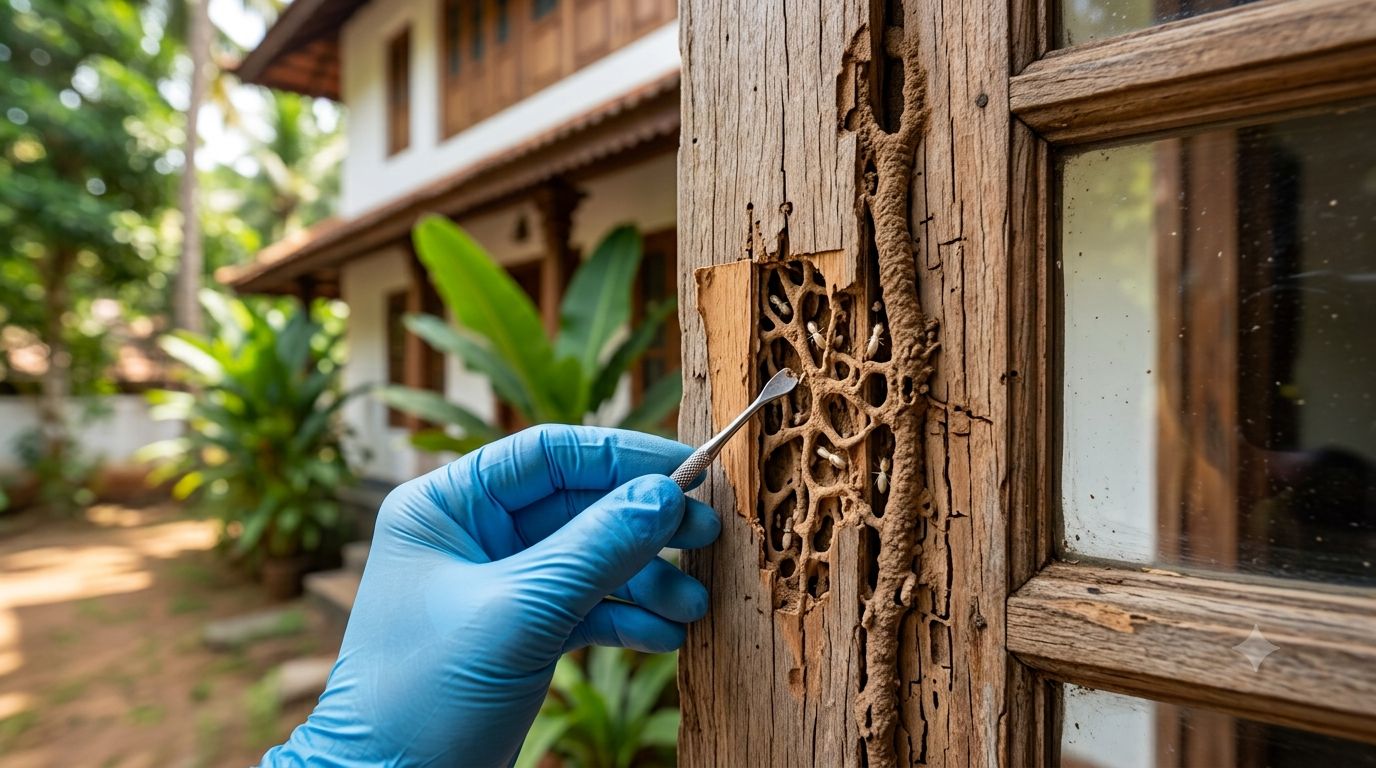
How to Identify a Termite Infestation Before It Causes Serious Damage
Termites can cause extensive property damage without giving homeowners many obvious signs in the early stages. Unlike pests that are easy to spot around kitchens, bathrooms, or gardens, termites often remain hidden inside wooden structures, beneath flooring, behind walls, or close to foundations. Their quiet activity can continue for months before the damage becomes clearly visible. Early identification is therefore important for protecting your property from long-term structural damage.
A property may look perfectly maintained from the outside while termites slowly weaken wooden doors, window frames, cabinets, flooring, furniture, and other timber components. Small holes, hollow-sounding wood, discarded wings, mud tubes, peeling surfaces, and doors that suddenly become difficult to close can all provide useful clues. One sign alone may not confirm an infestation, but several signs appearing together should never be ignored. Including regular inspections as part of Home Pest Control can help identify these warning signs before the damage becomes extensive.
Moisture can also increase the risk of termite activity. Leaking pipes, damp walls, poor drainage, and wooden materials placed close to soil can create favourable conditions for termites. Regular maintenance, moisture control, and periodic inspections can therefore make a significant difference in preventing termite problems.
All Clear Pest Control helps property owners identify termite activity and take suitable action before minor signs develop into expensive repairs
Why Early Termite Detection Matters
Termites feed on cellulose, which is naturally present in wood and several plant based materials. This makes wooden elements around a property potential food sources.
The real concern is not simply that termites consume wood. It is that they can damage the inside of a wooden component while leaving the outer surface looking relatively normal. A cupboard, door frame, or wooden beam may therefore appear fine until its internal strength has already been reduced.
An untreated infestation can eventually contribute to:
-
Weak wooden door and window frames
-
Damaged furniture and cupboards
-
Hollow or weakened flooring
-
Deterioration of wooden partitions
-
Damage to timber used in roofs and ceilings
-
Increasing repair and replacement costs
Early identification gives property owners an opportunity to investigate the source of the activity before the damage spreads further.
Warning Signs That Should Not Be Ignored
Hollow Sounding Wood
One of the easiest checks is to gently tap wooden surfaces. Healthy wood usually produces a solid sound. Timber affected by termite activity may produce a hollow or unusually dull sound because the insects have consumed material internally.
Check wooden areas such as:
-
Door frames
-
Window frames
-
Cupboards
-
Skirting boards
-
Wooden flooring
-
Furniture
-
Wooden partitions
A hollow sound does not automatically prove that termites are present. However, if the same area also shows cracks, holes, weakened surfaces, or other signs, further inspection is sensible.
Mud Tubes Along Walls and Foundations
Mud tubes are a common indicator of subterranean termite activity. These narrow structures allow termites to travel between their colony and a food source while remaining protected from exposure.
They can appear along foundations, walls, floor edges, cracks, pipe entry points, and other concealed routes.
If mud tubes are discovered, breaking them apart is not enough. Termites can rebuild the pathway or create another route.
For property owners looking for termite control service Aluva, an inspection should consider not only visible mud tubes but also nearby wooden structures and potential access points.
Discarded Wings Around Windows
Discarded wings can be one of the first signs noticed by homeowners. Reproductive termites leave established colonies to form new ones. After landing, they shed their wings.
Finding several small wings around windows, doors, lights, or other openings may indicate termite activity nearby.
Do not confuse this with ordinary household debris. If the wings repeatedly appear in the same area, it is worth arranging a proper inspection.
Small Holes in Wooden Surfaces
Small holes in timber can have several possible causes, so they should not automatically be considered proof of termites.
However, unexplained holes combined with weakened wood, mud tubes, discarded wings, or other damage deserve attention.
Look for:
-
Tiny openings
-
Surface cracks
-
Weak patches
-
Raised wooden areas
-
Damaged finishes
-
Unusual debris around timber
The overall pattern is more useful than one isolated hole.
Areas of a Property That Require Attention
Termites do not limit themselves to furniture. They can affect many wooden and concealed areas around a building.
Door and Window Frames
Frames located near floors, damp walls, or external walls should be checked regularly. The lower sections of wooden frames can be particularly important inspection points.
Flooring and Skirting
Wooden flooring can hide termite activity for a long time. Hollow sounds, uneven boards, swelling, unexplained gaps, or weakened sections may indicate a problem.
Cabinets and Furniture
Kitchen cabinets, wardrobes, beds, tables, storage units, and other wooden furniture should be checked periodically. Furniture placed directly against damp walls deserves additional attention.
Roof and Ceiling Timber
Wooden roof structures and ceiling components can be difficult to inspect. Any unexplained weakening, cracking, sagging, or deterioration should be professionally assessed.
When arranging termite control service Pathanamthitta, checking behind cabinets, beneath flooring, around door frames, and near moisture-prone sections can help uncover termite activity before visible damage spreads.
When a Sticking Door Could Mean More Than Moisture
A door that suddenly becomes difficult to close may appear to be an ordinary maintenance issue. Changes in humidity can cause wood to expand, but termite damage should also be considered when the problem appears alongside other warning signs.
Termites can weaken the internal structure of wooden frames. As the timber deteriorates, its shape and strength can change, affecting how the door operates.
The same issue can occur with:
-
Wooden windows
-
Cupboard doors
-
Drawers
-
Wooden partitions
-
Flooring around door frames
If a wooden fixture changes suddenly and there is no obvious explanation, inspect the surrounding timber instead of simply adjusting the hinges and forgetting about it.
Why DIY Treatment May Not Be Enough
Finding and killing a few termites may provide temporary satisfaction, but it does not necessarily solve the infestation.
The visible insects may represent only a small part of a much larger colony. Termites can remain inside walls, floors, wooden frames, soil, and other concealed locations.
Household sprays can also be limited because they generally affect only areas where the product directly reaches the pest. Treating the visible surface while leaving concealed activity untouched can allow the infestation to continue.
A reliable Termite Control Service should therefore focus on identifying the extent of the infestation rather than simply treating the insects that are visible.
Professional assessment becomes especially important when:
-
Termite signs appear in several areas
-
Mud tubes are visible
-
Wooden structures feel weak
-
Termites return after DIY treatment
-
The source of activity cannot be identified
-
Damage appears to be spreading
The Importance of Professional Inspection
A proper inspection looks beyond visible insects. The condition of wooden structures, moisture prone areas, foundations, concealed spaces, and potential termite entry points should all be considered.
A Professional Termite Control approach can help establish whether the activity is current, where it is concentrated, and what conditions may be supporting it.
An inspection can help identify:
-
Active termite areas
-
Potential entry routes
-
Damaged wooden components
-
Moisture related risks
-
Areas requiring treatment
-
Conditions that could contribute to future activity
The purpose is to understand the infestation before deciding how it should be treated.
Wood Termite Treatment for Damaged Timber
When termite activity affects wooden components, Wood Termite Treatment may be necessary depending on the condition of the timber and the extent of the infestation.
Treatment should be based on the actual situation rather than simply applying a general solution to the most visible area. A wooden surface may show little damage while its internal structure has already been affected.
A professional assessment can determine whether attention is required around the timber itself, surrounding areas, soil, access points, or other parts of the property.
All Clear Pest Control focuses on identifying the underlying termite problem rather than treating only the visible symptom. This helps create a more practical approach to termite management.
Termite Prevention Through Better Property Maintenance
Termite prevention does not depend entirely on chemical treatment. Regular property maintenance can reduce several conditions that make buildings more vulnerable.
Control Moisture
Repair leaking taps, pipes, drainage systems, and plumbing fixtures promptly. Persistent dampness should never be treated as a minor issue.
Improve Ventilation
Poor airflow can contribute to damp conditions. Improve ventilation in enclosed storage areas, bathrooms, kitchens, and other moisture prone spaces.
Avoid Direct Wood and Soil Contact
Where possible, keep wooden materials away from direct contact with damp soil. Stored timber should also be kept dry and properly elevated.
Inspect Furniture Periodically
Furniture can hide early termite damage, particularly when positioned against walls or kept in areas with poor ventilation.
Keep Storage Areas Organised
Excessive cardboard, paper, and unused wooden materials can make inspection more difficult. Keeping storage spaces accessible makes it easier to spot unusual signs.
What Property Owners Should Do When They Find Termite Signs
The first step is to avoid disturbing the affected area unnecessarily. Removing damaged wood or destroying mud tubes before inspection can sometimes make it harder to understand the extent of activity.
Instead:
-
Photograph visible signs
-
Note where the activity was found
-
Check nearby wooden components
-
Look for moisture problems
-
Avoid relying solely on household sprays
-
Arrange professional inspection when signs persist
Early action does not necessarily mean that major treatment is required. It simply gives property owners a better chance of understanding the problem before the damage becomes extensive.
Conclusion
Termite infestations are easier to manage when they are discovered before serious structural damage occurs. The challenge is recognising the early signs because termites rarely make their presence obvious. A property can look clean, well maintained, and completely normal while termites continue working inside wooden frames, flooring, furniture, walls, or other concealed areas.
Hollow sounding wood, mud tubes, discarded wings, unexplained holes, damaged finishes, sticking doors, and weakened timber should all be taken seriously when they occur without an obvious explanation. These signs do not always confirm a termite infestation individually, but several indicators appearing together should justify a closer inspection.
All Clear Pest Control provides practical termite management solutions designed around the actual conditions of the property. Whether the concern involves a home, office, commercial building, furniture, flooring, or structural timber, timely inspection can help prevent a manageable pest problem from becoming an expensive repair project.
Good termite prevention also involves everyday property care. Fixing leaks, controlling moisture, improving ventilation, keeping timber away from damp soil, and checking wooden structures regularly can reduce potential risks. Most importantly, do not wait for obvious structural damage before taking action. Termites are small, but their repair bills can be surprisingly large. Early detection and appropriate professional treatment remain two of the most effective ways to protect a property from long term termite damage.